Warehousing — The Time Cargo Spends Standing Still.
Warehousing is usually what makes the rest of the plan work. Suppliers finish production on different days, vessels sail in fixed windows and sites are not always ready to receive — so cargo is received, registered, held and then staged in loading order, with the handling that belongs alongside it. Storage terms are set with your quote rather than assumed, and one coordinator stays on the file while the cargo waits. The warehouse in Jordan is MASA's own.
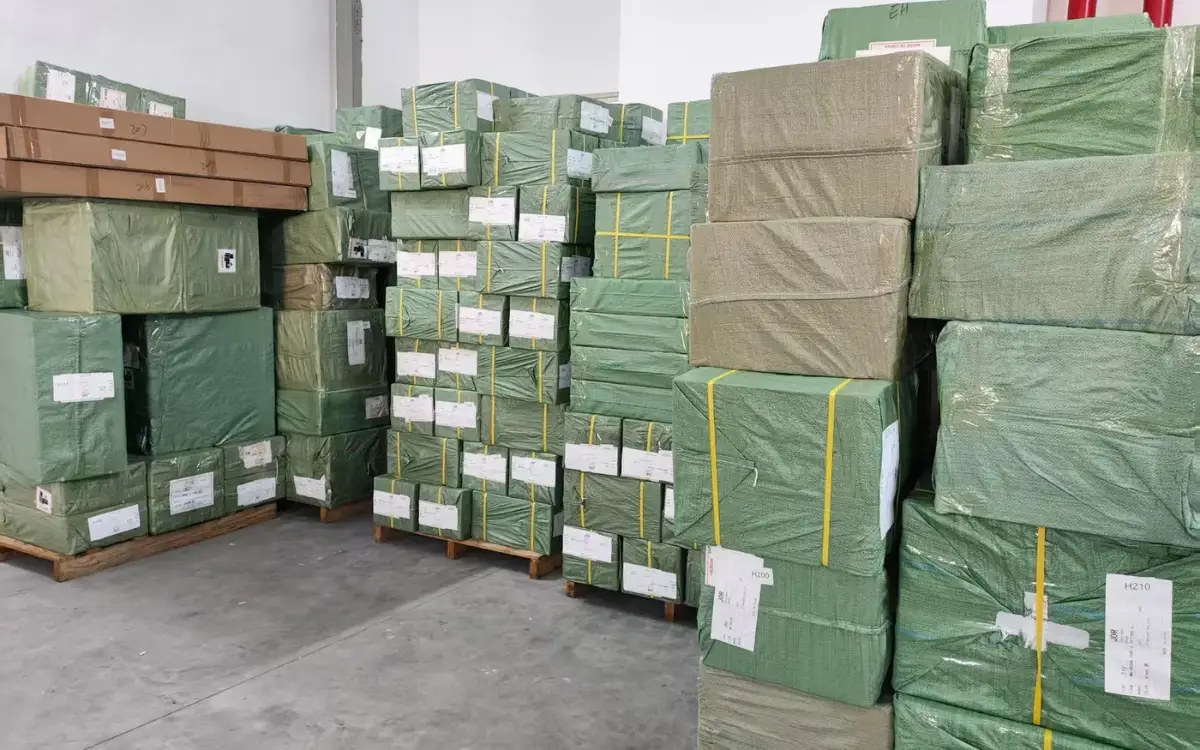
Storage is rarely the point of a shipment, but it is often what decides whether the rest of it holds together. A supplier finishes early, a vessel is still a week out, a site cannot take delivery until the floor is poured — in each case the cargo has to sit somewhere under control, with someone who knows what is in it and what happens to it next. That is the service: not a shelf, but a controlled pause with a record attached to it.
Why Cargo Waits
The Reasons Storage Appears in a Plan.
None of them are failures. They are the ordinary shape of an international move.
- Suppliers finish on different daysOn a consolidated order the last factory sets the sailing date unless the earlier ones can be held. Storage is what lets the first supplier deliver on time without the cargo standing in a truck waiting for the others.
- Vessels sail in fixed windowsSailings and flights do not move to suit a production line. Cargo that is ready before the window opens has to be held somewhere, and holding it deliberately is safer and cheaper than discovering where it ended up.
- Sites are not always ready to receiveEquipment arrives before the building can take it; seasonal stock arrives before the shelf needs it. Holding cargo near the delivery point and releasing it in batches is often the whole reason a schedule works.
- Clearance and inspection take timeCargo waiting on a document, an inspection or a permit still has to be somewhere. Where it waits and on what terms is agreed in advance rather than discovered when the first invoice arrives.
What Happens While It Waits
Received, Registered, Held, Staged.
Storage on its own is a floor. What makes it useful is the record and the handling that go with it.
- Received against the documentsCargo is checked in against the packing list as it arrives — pieces, marks, condition. What is recorded on arrival is what can be relied on later, and arrival is the point at which a discrepancy is still cheap to settle.
- Registered so it can be foundEach consignment is registered against your file. When it is time to load, the cargo is located and pulled rather than searched for, which is the difference between a loading day and a loading week.
- Held under controlHeld cargo is not simply parked. It stays identified and separated by consignment, so nothing is loaded into the wrong shipment and nothing is released against the wrong order.
- Handling alongside the storagePalletizing, wrapping, marking and re-checking cartons. The goods are prepared for the handling ahead of them, which is usually the difference between a clean discharge and a damaged one.
- Staged in loading orderBefore loading, cargo is staged in the order it will go into the container or onto the trailer. Loading is where time is lost when the sequence has not been worked out beforehand.
- One coordinator on the fileThe person who books the freight follows the cargo while it waits, so an answer about what is in stock and what is ready comes from the file rather than from a phone call to a warehouse.
The China side of this — receiving from several suppliers and building one controlled shipment out of it — is set out in full on the China warehouse page.
Before You Book Storage
What Sets the Terms.
Storage is quoted, not assumed. This is what the quote is built from.
- How long, and how certainA fixed two weeks and an open-ended hold are different services. Tell us which one it really is — an honest estimate is more useful to price against than an optimistic one.
- What the cargo is, and what it needsVolume and piece count set the space. Anything that has to stay dry, stay upright, stay separated or stay within a temperature range has to be said at the start, not after it arrives.
- What has to happen to itStraight storage is one thing. Storage with palletizing, wrapping, re-marking or repacking is another line on the quote, and it is better priced at the beginning than added in the middle.
- How it comes out againAll at once, or released against orders? Release in batches is normal, and it changes how the cargo is staged on the way in — which is why it belongs in the enquiry.
Common Questions
Warehousing, Answered.
Do you provide warehousing as well as freight forwarding?
Yes. Cargo handling, warehousing and storage services are among the activities MASA Logistics is licensed for, and they run on the same file as the freight, with one coordinator on it.
How is storage charged?
Storage terms are set with your quote rather than assumed. They depend on the space, how long the cargo is held and whether handling work goes with it, so they are set against your actual cargo instead of published as a standard rate.
Can you receive goods from several suppliers and ship them together?
Yes — that is consolidation, and it is what our China warehouse operations are built for: cargo received from multiple suppliers, checked, held and loaded as one controlled shipment. The China warehouse page covers the process in detail.
What handling can be done while cargo is in storage?
Palletizing, wrapping, marking and re-checking cartons, so the goods are prepared for the handling ahead of them. Tell us what is needed at the quote stage, because it is priced with the storage rather than added afterwards.
Will I know what is actually in storage?
Cargo is checked in against the packing list and registered against your file, so the piece count, the marks and the condition on arrival are recorded rather than remembered.
Can cargo be released in batches instead of all at once?
Yes. Releasing against orders is normal, and it is worth saying at the outset because it changes how the cargo is staged when it goes into store.
Related