Sea Freight and FCL Shipping — Containers to Jordan Under One Contract.
MASA books ocean freight from origins worldwide — a full container for your cargo alone, or space in a shared one — and stays on the file through the port stage and customs. China is our busiest lane. Into Jordan, cargo is discharged at Aqaba, where our own operations team is on the ground. Sea freight moves on a fixed rhythm: a booking, a cut-off, a sailing, then a port at the other end.
Choosing the Mode
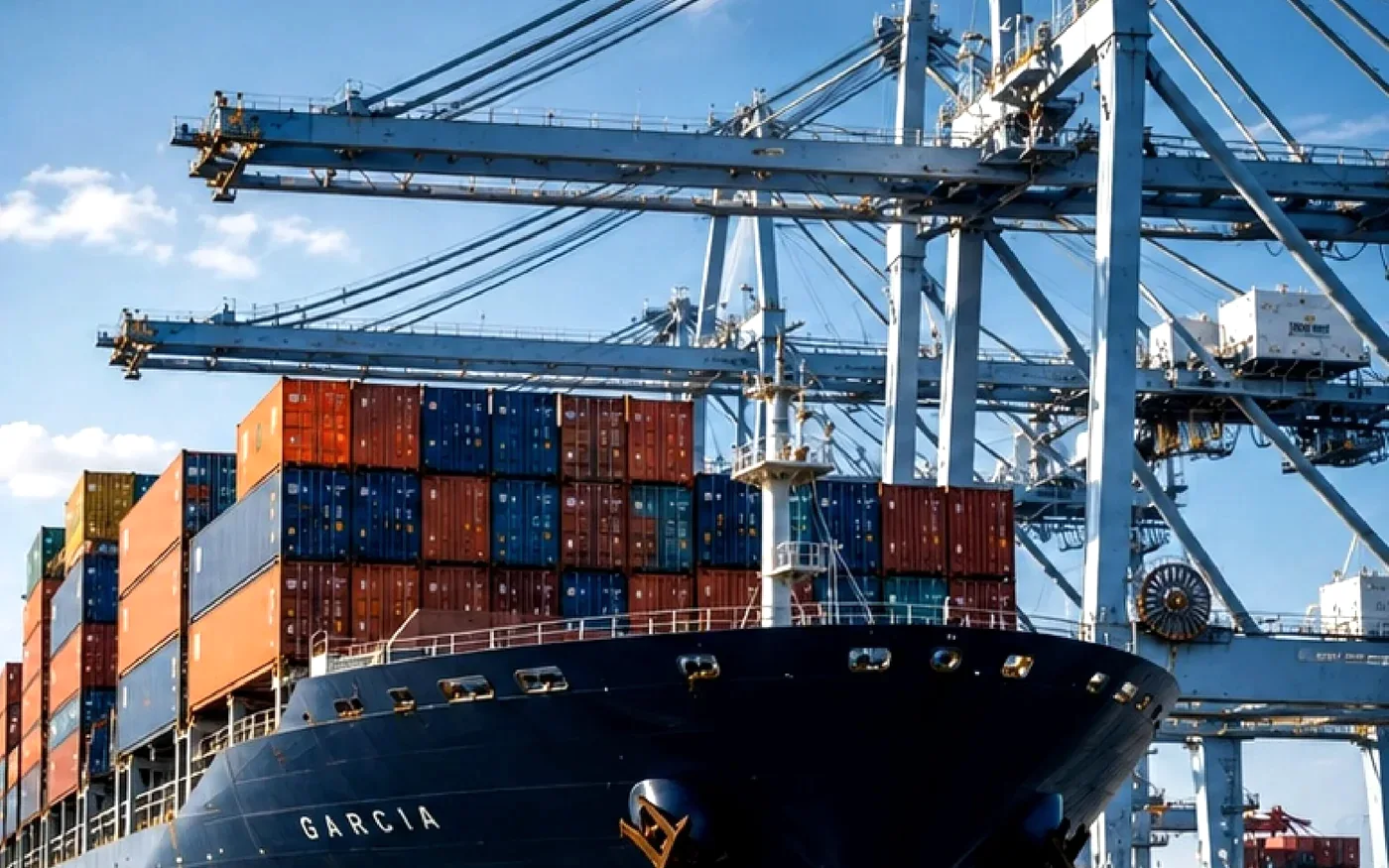
When Sea Freight Is the Right Mode.
Sea freight trades time for capacity. Air moves cargo quickly and prices it accordingly; sea moves it on a fixed sailing schedule and carries volume and weight that air cannot take sensibly. For a standing import programme the answer is usually sea, with air kept for the part of an order that genuinely cannot wait for the next vessel.
- Your order is heavy or bulky enough that air pricing stops making sense
- You buy on a repeating cycle and can plan around fixed sailing dates
- The goods can wait for the next vessel without costing you a sale
- You are combining cargo from several suppliers into one movement
- You want the option of scaling from shared space to a full container later
Most of what we book by sea moves in a container, and the container is where the decisions sit. A box taken for your cargo alone behaves differently from space inside a shared one: a different rate structure, different handling, different paperwork, and a different exposure at the port. Wheeled units and pieces too large for any box are their own cases and are planned separately. The sections below are written for the container shipper.
Full Container Load
FCL — A Container Booked for Your Cargo Alone.
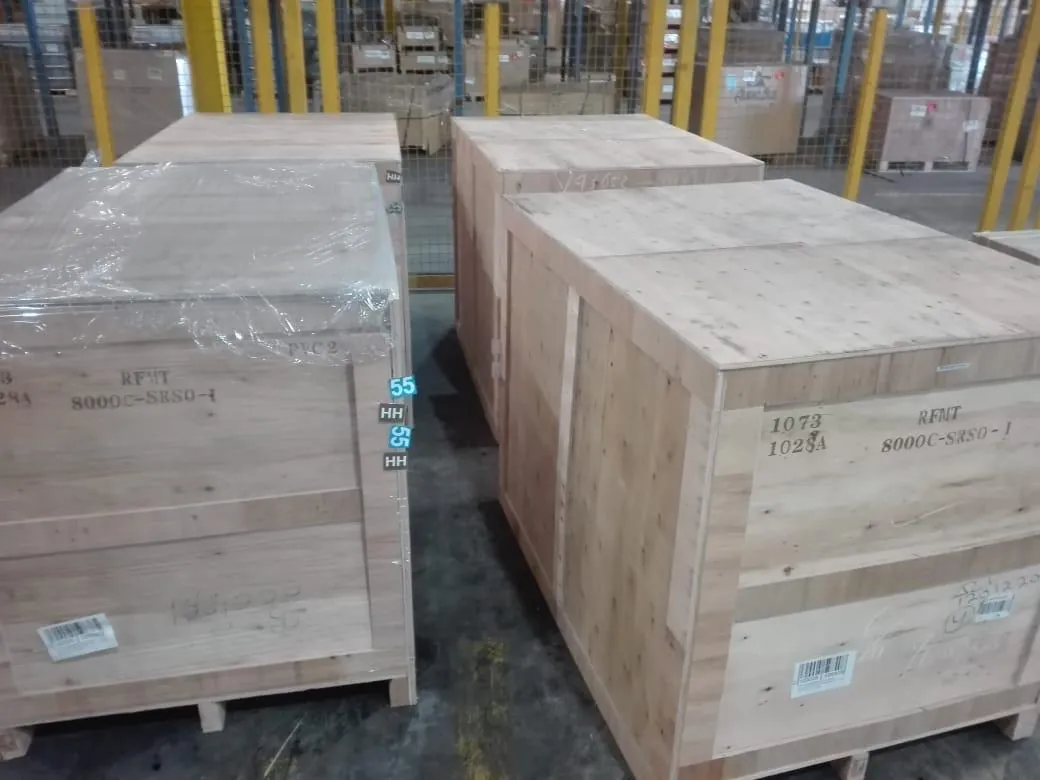
FCL means Full Container Load: the container is booked for your goods and nothing else. It is packed at origin, sealed, and the seal is normally not broken again until customs or the consignee opens it. There is no consolidation step before it loads and no deconsolidation step after it lands, which removes both the extra handling and the waiting that sharing a box brings.
FCL earns its place once an order fills, or comes close to filling, a container. Past that point you are paying shared-container rates for a volume that would cost less as a whole box, and you are still paying for the handling that sharing brings. It earns its place earlier than that for cargo you would rather nobody stacked against: fragile goods, high-value goods, strongly scented goods, or anything that should be handled as few times as possible.
The MASA side of an FCL booking is the unglamorous part. Space and equipment are secured with the carrier, cut-offs are confirmed, the container is positioned at the loading point, and the load plan is agreed for a sea passage rather than a truck ride. A standard dry container is the default; where the load will not sit inside one, specialised equipment is quoted instead.
A container also has limits that have nothing to do with space. Payload is capped by the equipment, by the carrier and by the road rules at each end, so a dense cargo can reach its weight ceiling while the box still looks half empty. Those limits differ by equipment type, carrier and country, so the working figure is confirmed against your actual cargo at booking rather than assumed.
Booking and Rates
How a Sea Shipment Is Booked and Priced.
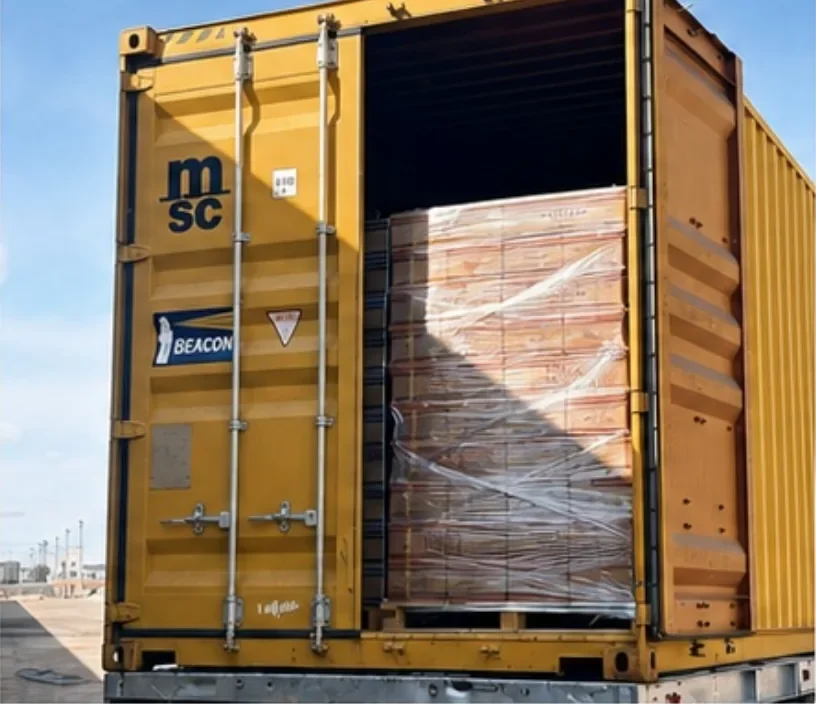
A sea booking is a place on a named vessel, and it arrives with dates attached: a cut-off for the documentation the carrier needs, and a cut-off for getting the container into the terminal. Miss either and the booking normally moves to the next sailing. A carrier can also roll a booking that made every cut-off, simply because the vessel loaded full. Hitting the cut-offs keeps a booking on the sailing it was made for; it is not protection against the vessel filling, which is why a sailing date is a plan rather than a promise.
Before a packed container is loaded, the shipper has to declare its verified gross mass — cargo, pallets, dunnage and securing material, plus the container's tare. It is a condition of loading rather than a formality: carriers normally will not load a box without a declared figure. The shipping instructions that become the bill of lading go in during the same window: shipper, consignee, notify party, marks, piece count, description and weights. Those details reappear on the customs entry, so an error made here follows the shipment to the border.
A full container is priced as a unit — one box, one rate — with the carrier's and the terminals' charges at each end alongside it. Shared space is rated on weight or measurement: both are converted to the carrier's chargeable unit, and the greater of the two is what you pay, so a dense consignment reaches a higher rated figure at a smaller volume. Neither number is the landed cost on its own: handling at each end, duties and taxes, and inland delivery belong in the same quotation.
The Document the Cargo Moves On
The Bill of Lading Decides Who Collects the Cargo.
The bill of lading is the document a sea shipment turns on. It does three jobs at once: it is the carrier's receipt for what was loaded, it evidences the contract of carriage, and in its negotiable form it is a document of title — whoever holds it, properly endorsed, can claim the goods. On a forwarder booking there are commonly two bills in play: the master bill the shipping line issues, and the house bill the forwarder issues to the customer. Which one you hold, and therefore who you surrender it to at destination, is told to you at booking.
Cargo is released at destination against the bill, so the names on it matter. The consignee is who may take delivery. The notify party is only the address the carrier sends the arrival notice to, and being named there gives nobody a right to the goods. Where original bills are issued, an original is surrendered before the carrier releases the cargo, which is why the originals are tracked as carefully as the cargo itself.
There are two alternatives to that. A sea waybill is a different transport document with no originals in existence: it names one consignee, it is not negotiable, it is not a document of title, and the carrier releases to that named consignee on proof of identity. Where originals were issued, the shipper can instead surrender all of them at origin and instruct the carrier to release without them — the express or telex release. Which of the three applies is agreed at booking, not discovered at arrival.
The description, marks, piece count and weights printed on the bill are the same figures the customs entry is built from. When the packing list says one thing and the bill says another, the discrepancy surfaces at the border, where fixing it costs storage and days instead of an email. We check the draft bill against the commercial documents wherever the carrier circulates one before release, while a correction is still a reissued document.
The Port Stage
What Actually Happens at the Port.
Between the vessel berthing and your cargo leaving on a truck there is a sequence that runs on the port's clock rather than yours. It is where a lot of the unexpected charges in sea freight are generated, and it is the stretch of the journey importers see least.
None of those six steps belongs to you, and that is the point. The terminal decides the discharge order, the carrier decides when release is granted, and the authority decides whether the entry clears on the first look. What you control is whether the documents and the entry are ready before the vessel arrives — the difference between a container that gates out inside its free time and one that starts accruing charges while everyone waits on a file. Into Jordan, that preparation sits with the same team that took the booking.
Free Time and What Follows
Demurrage and Detention, Before They Bite.
A sea booking normally carries free time: a period set by the carrier and the terminal during which the container may sit without a daily charge. Free time is not a courtesy and it is not the same on every booking. Once it runs out, charges accrue per container per day, and they accrue regardless of whose fault the delay was. Detention is a full-container charge — on shared space you never hold the box, so what runs against you at destination is the warehouse's storage clock instead.
The two are usually distinguished like this. Demurrage runs while the container is still inside the terminal past its free time — the cargo has landed but has not been collected. Detention runs after the container has left the terminal, while it sits at your premises or in transit and has not yet been returned empty. Terminals may also bill their own storage separately. Carriers do not use the words identically, so the definition written into your booking is the one that governs.
What reduces the exposure to both is the same thing: having documents complete and the entry ready before the vessel arrives, instead of starting when the arrival notice lands. It cannot remove the risk — an examination, a congested terminal or a slow release still burns days nobody planned — but it removes the days that are ours and yours to remove. That is why clearance is prepared at origin, and why the free time on your booking is confirmed with the carrier up front rather than discovered at arrival.
Jordan's Sea Gateway
Sea Freight to Aqaba, With Our Own Team on the Ground.
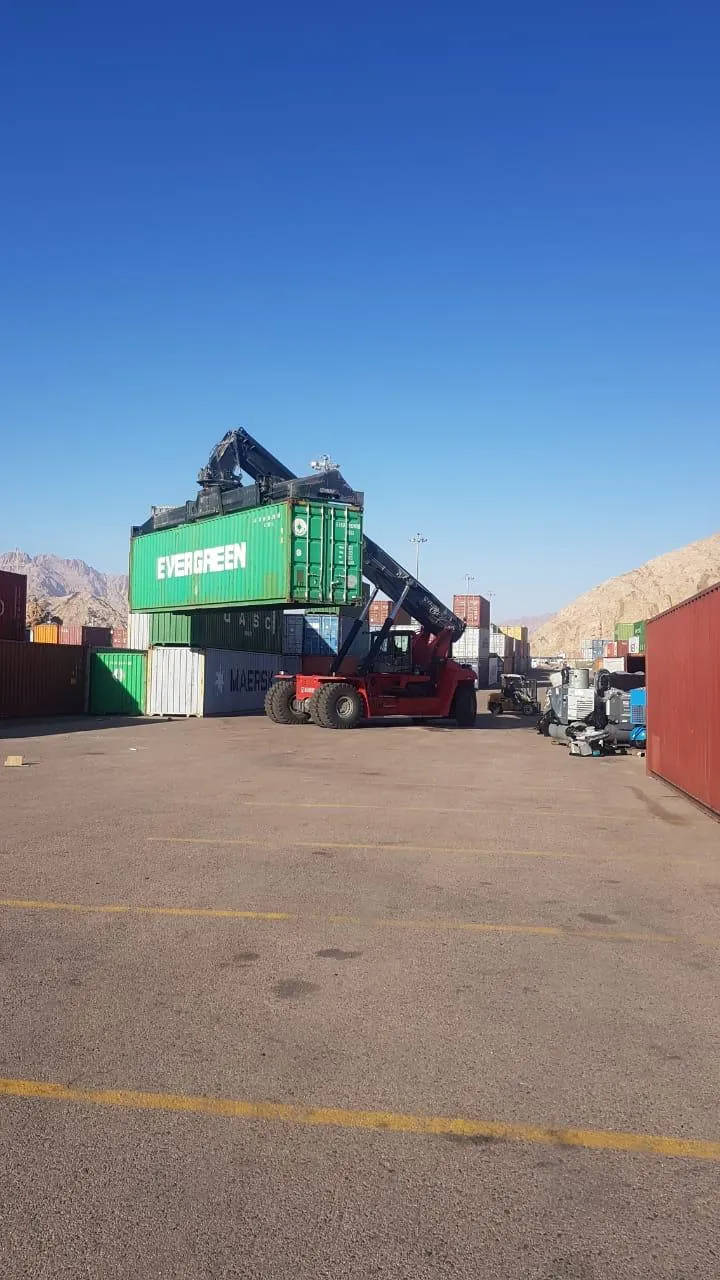
Jordan's only seaport is Aqaba, on the Red Sea, and it is where MASA's sea freight for the Jordanian market is discharged. Clearance is made either at Aqaba itself or, where it suits the consignee, after the container moves inland under customs transit to a customs centre nearer the delivery point. MASA keeps an office in Aqaba alongside the head office in Amman, and our own operations team is on the ground at the port. You keep a single point of contact on the file through arrival, clearance and delivery.
On the China lane, sea transit to Aqaba runs 18–28 days, route dependent, and the rest of the chain is set out stage by stage on our DDP page. A transit time is not a delivery date, and it moves with the service, the transhipments and the season. Those figures describe the Jordan lane. Transit times are published for the China–Jordan lane only; schedules for other lanes are confirmed per shipment when you request a quote.
Not every container discharged at Aqaba is bound for the Jordanian market. Cargo continuing to Iraq crosses Jordan in transit: it does not enter the Jordanian market, and no Jordanian duty is collected on it. That route — sea to Aqaba, then overland to the Karameh–Trebil crossing — is set out end to end on our China to Iraq through Aqaba page.
Aqaba is an export gate as well as an import one. Jordanian cargo leaves through it for destinations worldwide, with collection, export documentation and port work handled by the same team. The direction changes and the paperwork changes; the contract and the point of contact do not.
The Honest Comparison
FCL or LCL — the Honest Answer.
Volume decides this most of the time, but not always — and weight can decide it faster than volume does. Four things move the answer, and only one of them is the size of the order. Here they are in the order they usually matter.
Our recommendation follows the cargo, including when that means quoting you less freight than you came in asking for. And moving between the two is a conversation rather than a change of provider — the same contract, the same team, the same point of contact on the file.
- Take LCL while the cargo is smaller than the boxYou pay for what your cargo measures or weighs rather than for a whole container, so a first order or a small restock does not carry a box on its own.
- Take FCL once the volume is close to a containerThe shared-space charge overtakes the box, and the consolidation and unpacking steps disappear with it.
- Let the cargo decide when volume is not the issueFragile, high-value, strongly scented or handling-sensitive goods travel better in a box sealed at loading.
- Let weight decide when the cargo is denseDense cargo reaches the crossover at a much smaller volume than you would expect from the cubic metres alone.
Special Equipment
Reefer Containers and Out-of-Gauge Cargo.
Two kinds of cargo need a different box. Goods that must hold a temperature travel in a reefer container; goods that will not fit inside a standard container travel on an open top or a flat rack. MASA arranges both, import and export, and each is planned per shipment rather than assumed.
- Reefer, import and exportMASA arranges refrigerated container shipping in both directions. The unit is a 20RF or 40RF, the set point is agreed for the commodity before booking, and the container is pre-trip inspected before loading.
- Open top for over-heightWhen the cargo is taller than a container door allows, an open-top unit is loaded from above and tarped. MASA has shipped cargo this way; the measurements decide it, so send them first.
- Flat rack for over-width and over-lengthCargo wider or longer than a container travels on a flat rack, lashed to the deck. Beyond what a flat rack carries, the answer is break bulk or heavy lift under project cargo.
- What we need to quoteLength, width, height and weight per piece, the commodity, and for reefer the required temperature. That is enough for a yes, a no, or a better option.
Frequently Asked Questions.
What is the difference between FCL and LCL?
FCL is a container booked for your cargo alone: packed at origin, sealed, and moving as one unit, with no consolidation before it loads and no unpacking after it lands. LCL is space inside a container shared with other consignments, rated on weight or measurement — whichever gives the higher chargeable figure — so dense cargo is not priced on volume alone. FCL usually becomes the better answer once an order fills, or comes close to filling, a container.
How much does it cost to ship a container to Jordan?
There is no list price: a container rate moves with the origin, the equipment, the season and the carrier. A full container is priced as a unit — one box, one rate — with carrier and terminal charges at each end alongside it. Shared space is rated on weight or measurement, and the greater of the two converted figures is what you pay. Neither figure is the landed cost by itself: origin and destination handling, duties and taxes, and inland delivery belong in the same quotation.
How long does sea freight from China to Jordan take?
Into Aqaba, Jordan's seaport, sea transit runs 18–28 days, route dependent. Customs clearance in Jordan takes 1–3 business days for document-ready cargo, and final delivery 1–2 business days after release. Those figures are for the Jordan lane and describe transit, not a guaranteed arrival date — the service, transhipments and port conditions all move it. We confirm the schedule for your specific booking when we quote.
What are demurrage and detention?
Both begin when free time runs out. Demurrage generally applies while a container remains inside the terminal after its free time; detention applies once it has left the terminal and has not been returned empty. Carriers define the terms differently, so the wording in your booking governs. Preparing the documents and the customs entry before the vessel arrives reduces the exposure, but it does not remove it: the free time is the carrier's to set, and a customs examination or a port delay can still run the clock.
What is a bill of lading?
It is the carrier's receipt for the cargo, evidence of the contract of carriage, and, in its negotiable form, a document of title. Cargo is released against it, so the consignee named on it is who may take delivery; the notify party is only the address the arrival notice goes to, and being named there gives nobody a right to the goods. Its description, marks, piece count and weights are the figures the customs entry is built from, so we check the draft wherever the carrier circulates one before release.
Which countries do you ship sea freight from?
From origins worldwide. China is our busiest lane, not our only one — full containers and shared containers are both available from other origins, and the process does not change: booking and cut-offs at origin, documents checked before the cargo moves, and one accountable team on the file from booking through to delivery. Tell us the port or the supplier's city and we will confirm the service and the schedule for it.
Can you ship hazardous or dangerous goods by sea?
Dangerous goods are handled via certified licensed partner agents — subject to MSDS review, carrier acceptance and route restrictions. In practice that means the safety data sheet is reviewed first, the carrier decides whether it will accept the cargo, and the route may limit what can move. Send the MSDS with your enquiry before anything else is arranged, because acceptance is decided on the product rather than on the booking.
Is my cargo insured while it is at sea?
No. The freight rate buys carriage, not cover. A bill of lading is issued under a carriage convention, and that convention caps what the carrier answers for on its own basis rather than on what your goods are worth. A sealed box at sea is also exposed to heavy weather, to a general average declaration, and to damage found only at the unpack. MASA can arrange cargo insurance through providers; we do not underwrite it. Whether to insure, and for how much, is your decision. Ask at booking.
Start With the Cargo
Tell Us What Ships and From Where.
Send the origin, the destination and what the cargo is — dimensions and weight if you have them — and the term you bought on, EXW or FOB or CIF, because that decides which end of the journey your supplier has already paid for. We come back with a sea freight quote, the equipment it needs, and a straight answer on whether a full container or shared space serves you better.